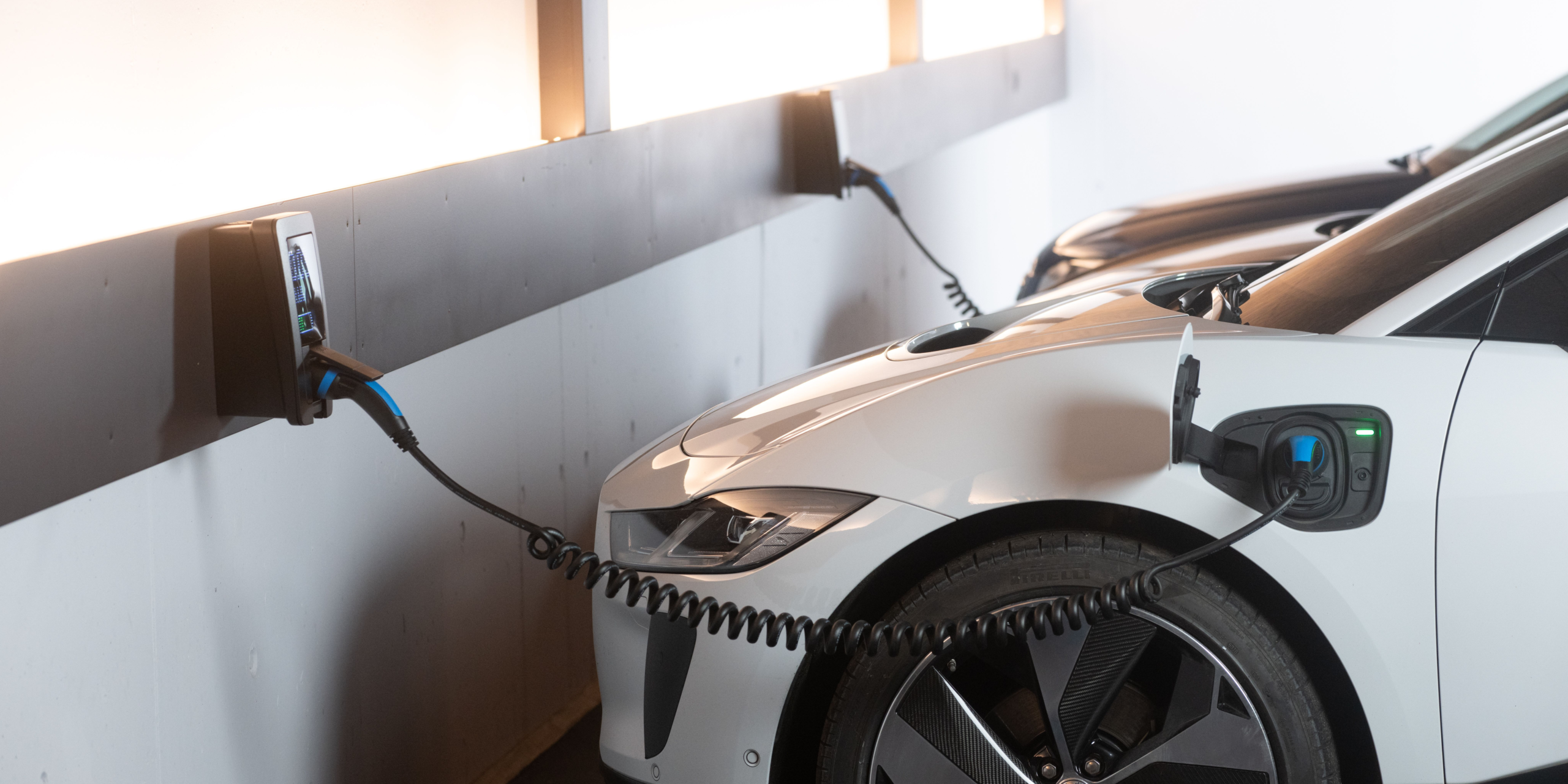
Electric fleet adoption is growing, but businesses are facing an increasingly important question: how can they ensure every vehicle is charged when needed without unnecessarily increasing energy costs?
Imagine a company operating 20 electric vehicles. At the end of the day, they return to the company premises and are plugged into charging stations. The following morning, they need to be ready for their next journeys.
It sounds straightforward. But do all 20 vehicles really need to charge at the same time? Do they all have the same remaining driving range? Do they need to leave at the same time?
These questions highlight why fleet electrification requires energy planning, alongside vehicle selection and charging infrastructure.
Charging infrastructure remains one of the biggest challenges
According to Arval Mobility Observatory – Global Fleet and Mobility Barometer 2026an international study involving 10,157 decision-makers across 33 countries, charging infrastructure remains a significant barrier to electric vehicle adoption among businesses.
The findings highlight three important figures:
68% identify charging infrastructure as a barrier to adopting light-duty electric vehicles.
31% identify increasing Total Cost of Ownership (TCO) as a challenge in fleet electrification.
66% already use or plan to introduce electric vehicles within the next three years.
These figures show that electric mobility is part of many organisations' plans, although challenges related to infrastructure and financial viability remain.
As the number of electric vehicles increases, so does the need to coordinate charging with daily fleet operations.
The problem with charging every vehicle at the same time
Consider a company operating 20 electric vehicles, each connected to an 11 kW charger.
If all vehicles charge simultaneously at maximum power, the total power demand could reach 220 kW.
But what if only five vehicles need to leave at 7 a.m., while the remaining vehicles will not be used until the afternoon?
In this scenario, supplying the same charging power to every vehicle from the start may not be the most efficient approach.
The company could be creating a peak in electricity demand that requires greater electrical capacity, even though some of that energy could be distributed over the following hours.
This is where smart charging for electric fleets becomes particularly relevant.
With appropriate charging management systems, businesses can schedule charging sessions, distribute available power and prioritise vehicles according to operational requirements.
The aim is to ensure vehicles receive the energy they need before their next journey while respecting the electrical infrastructure's capacity limits.
Not every vehicle needs the same amount of energy
A vehicle that has travelled 40 kilometres during the day may have very different charging requirements from one that has covered 250 kilometres.
The same applies to departure times.
A vehicle that needs to be available at 6 a.m. should be prioritised differently from one that will not be used again until 2 p.m.
To organise these priorities, fleet managers need to understand expected vehicle usage, regular routes, departure schedules and, where available, battery State of Charge (SoC).
This information helps estimate energy requirements and supports charging planning.
For example, if charging infrastructure has limited power capacity, a charging management system could initially allocate more power to vehicles with earlier departure times and distribute the remaining capacity among the others.
Naturally, this coordination depends on the capabilities of the charging stations, energy management systems and available integrations.
How much does it cost to charge an electric fleet?
Charging costs depend on energy consumption, electricity tariffs, available power capacity and how the charging infrastructure is used.
A company may be able to reduce its energy expenses by shifting some charging sessions to periods with more favourable electricity rates, provided this is compatible with vehicle operating schedules.
It is also important to consider installation costs, potential electrical capacity upgrades, charger maintenance, and the use of public charging stations.
These factors should be included when calculating the Total Cost of Ownership (TCO) of an electric fleet.
After all, the financial viability of fleet electrification depends on how vehicles are used and charged throughout their lifecycle.
The role of data in electric fleet management
An efficient charging strategy starts with understanding fleet operations.
How many kilometres does each vehicle travel? How long does it remain parked? When does it need to be back on the road? What is the operating cost of each vehicle?
By bringing together information on vehicle usage, routes, costs and availability, fleet managers can identify patterns and make more informed fleet electrification decisions.
Fleet management platforms such as JAT Fleet help centralise operational and financial data, providing a clearer view of vehicle usage.
When considered alongside information from charging management systems, this data can support decisions about charging priorities, infrastructure capacity and energy planning.
However, charger management and automated power distribution depend on dedicated systems and the integrations actually available.
Fleet electrification also requires charging planning
Replacing internal combustion engine vehicles with electric models represents a significant change in corporate fleet management.
As electric fleets grow, decisions about when to charge, how much power to allocate and which vehicles to prioritise directly affect operational availability and costs.
Before investing in additional chargers or increasing contracted electrical capacity, businesses should therefore assess whether their existing infrastructure is being used as efficiently as possible.
A fleet of 20 electric vehicles does not necessarily need 20 vehicles charging at maximum power simultaneously. It needs all 20 vehicles to be ready for their next operational requirements.
And that difference starts with planning.